
- News
- City News
- mumbai News
- Mumbai part of 5 districts with ‘no heat stroke cases’ this year
Trending
This story is from May 10, 2024
Mumbai part of 5 districts with ‘no heat stroke cases’ this year
State public health department highlights underreporting of heat-related deaths in Mumbai. Disparities exist in heatstroke cases among districts with high temperatures. Some districts report no cases despite soaring temperatures, prompting concerns and calls for accurate documentation.
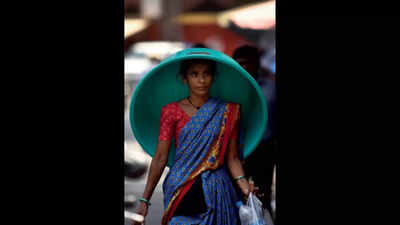
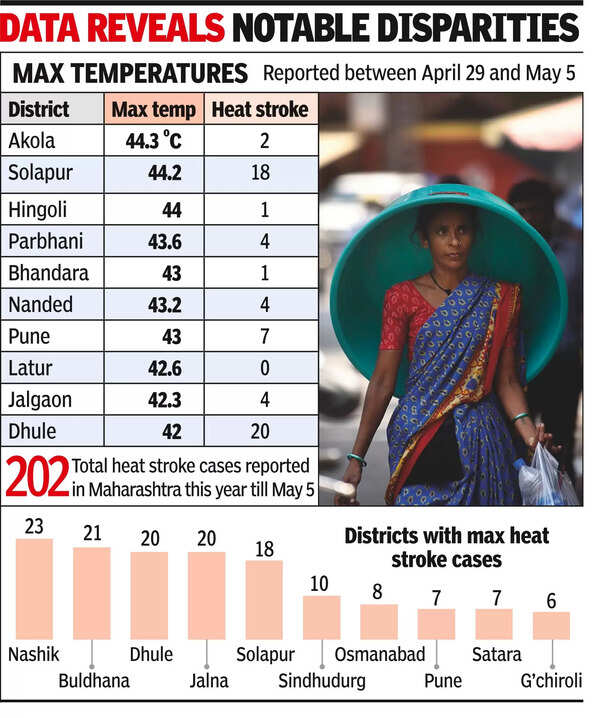
202 Total heat stroke cases reported in Maharashtra this year till May 5
State data revealed notable disparities: for instance, despite Akola experiencing the highest maximum temperatures between April 29 and May 5 among all districts, it has reported just two cases of heat stroke since March.

The state health department held an online meeting on Tuesday where districts were asked to report heat strokes accurately. “Our worry is that certain districts are not documenting heat stroke cases appropriately. It is evident when you compare the incidence between districts. Some are experiencing many high temperature days but not seeing heat stroke cases. How is that possible?” said Dr Radhakrishna Pawar, deputy director state health services.
Mumbai city and suburban, Latur, Nandurbar and Washim are five districts that haven’t reported any heat stroke cases this year, though Nandurbar and Latur have clocked maximum temperatures over 42 degrees in the past week. The city too had experienced temperatures nearing 40 degrees as heat wave alerts were sounded on three occasions in April.
We also published the following articles recently
Maximum temperature in Rajasthan likely to increase by 2 to 3 degrees Celsius
Heat wave conditions in Rajasthan intensify as maximum temperatures rise by 2-3 degrees Celsius. MeT department predicts heat waves in various districts, with temperatures reaching 44-45 degrees Celsius in Western Rajasthan.
Heat wave conditions in Rajasthan intensify as maximum temperatures rise by 2-3 degrees Celsius. MeT department predicts heat waves in various districts, with temperatures reaching 44-45 degrees Celsius in Western Rajasthan.
Heatwave warning issued for 8 states as temperature crosses 45 degrees: Tips to stay safe
IMD warns of heatwave in 8 states with temperatures above 45 degrees. Health risks include heat-related illnesses like heat exhaustion and heatstroke. Stay hydrated, seek shade, and be aware of symptoms to stay safe.
IMD warns of heatwave in 8 states with temperatures above 45 degrees. Health risks include heat-related illnesses like heat exhaustion and heatstroke. Stay hydrated, seek shade, and be aware of symptoms to stay safe.
Why anger could bring stroke of bad luck
Anger adversely affects blood vessels, hindering dilation and repair mechanisms. Recurrent anger episodes increase cardiovascular risks like atherosclerosis and hypertension. Managing anger triggers and practicing stress-relief techniques are crucial for heart health.
Anger adversely affects blood vessels, hindering dilation and repair mechanisms. Recurrent anger episodes increase cardiovascular risks like atherosclerosis and hypertension. Managing anger triggers and practicing stress-relief techniques are crucial for heart health.

About the Author
Sumitra DebroyEnd of Article
FOLLOW US ON SOCIAL MEDIA







Photostories
Hot Picks
TOP TRENDING
Popular Categories
Hot on the Web
Top Trends
Travis KelceIsrael Hezbollah WarIND vs PAK Live ScoreElection Exit PollsIND vs BAN Live ScoreKayla NicoleShan MasoodPrince WilliamAmethi Murder CaseAssembly Election Result 2024 LiveUGC NET ResultDiddyWomen's T20 World CupTop MBA Colleges of IndiaT20 WC ScheduleWomen T20 World Cup Points TableLive Cricket Score
Trending Topics
Bigg Boss 18 Launch LIVE UpdatesBigg Boss Tamil 8 Contestants ListBigg Boss Tamil 8 Launch LIVE UpdatesNavratri Colours 2024Navratri Day 2 ColourTMKOC New SonuBigg Boss 18 House PhotoDevara CollectionGOAT OTT ReleaseDeepika PadukoneGovindaDevaraGovinda NewsDevara Movie ReviewSwatantrya Veer SavarkarColdplay India tour 2025Maa Durga 108 NamesNavratri JewellerySony Bravia 55 inch 4k Ultra HD TVWordle Answer
Living and entertainment
Latest News
Virgo, Weekly Horoscope, October 06 to October 12, 2024: Financial setbacks may arise mid-week but will improve by the weekend49ers' Christian McCaffrey May Return in Week 7 Against Chiefs, Adam Schefter Shares Latest Injury UpdateBigg Boss Tamil 8: Sunitha Gogoi to dazzle with dance performance from Vijay’s film 'GOAT'Zodiac Sign Women Who Cherish Independence"Will form govt in both Haryana, J-K": BJP's Tarun Chugh on upcoming Assembly elections resultsCongress' Jairam Ramesh highlights 'three dark clouds' threatening Indian economy's growthRevealed: The real reason Taylor Swift was missing from Travis Kelce's birthday celebrationFans shower praises for Indira Krishna's role Paani Bai in Durga writes, "She's Lady Nana Patekar, Yeh toh Komolika ka bhi record todegi"Will Varun Dhawan, Shraddha Kapoor, and Kriti Sanon come together in 'Stree' x 'Bhediya' film?Bigg Boss Tamil 8: Actress Sachana Namidass to participate in the upcoming season?Yamuna river pollution hits record high in Delhi: Faecal coliform levels soar in SeptemberMayank Yadav set to become a capped player ahead of IPL auction'No need to think about India's foreign policy': BJP' Kavinder Gupta on Mirwaiz Farooq statementBigg Boss 18 Promo: Salman Khan reveals the theme of the season by predicting the contestants' future in the houseBigg Boss Tamil 8: Ex-contestant Pradeep Anthony to participate in the upcoming season?State reminds pvt med colleges to follow SC mandate, resume admissions; colleges wait for assurance on fee reimbursementsWomen's T20 World Cup: Where India stand in race of semifinals after nervy win against PakistanBigg Boss Tamil 8 logo unveiled: Vijay Sethupathi set to host the new season
Copyright © 2024 Bennett, Coleman & Co. Ltd. All rights reserved. For reprint rights: Times Syndication Service